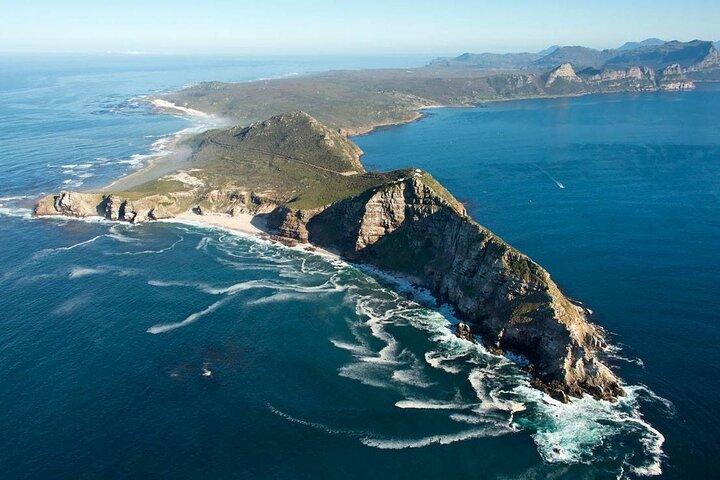
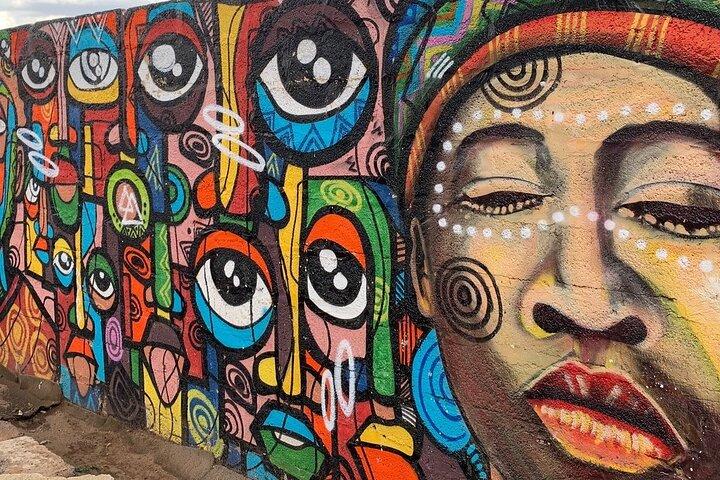
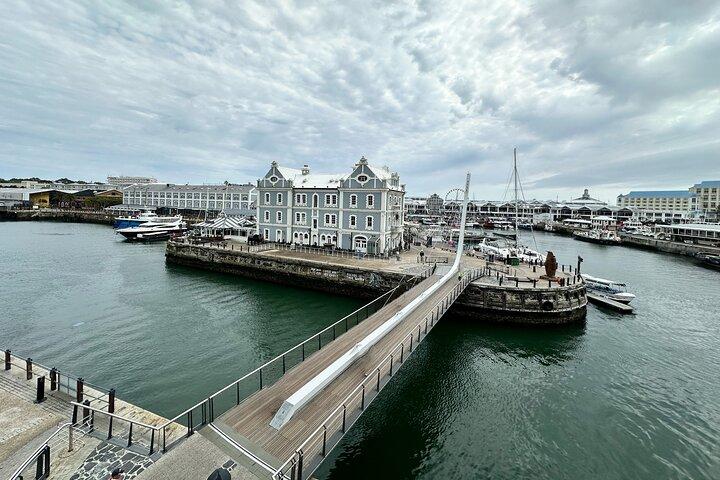
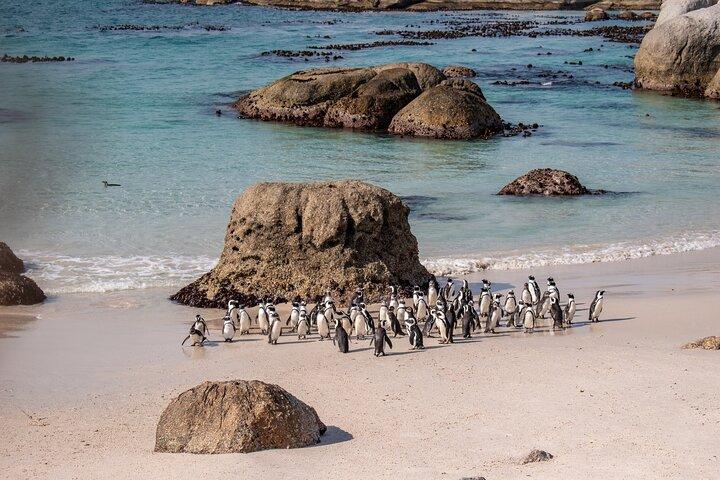
South Africa, officially the Republic of South Africa (RSA), is the southernmost country in Africa. Its nine provinces are bounded to the south by 2,798 kilometres (1,739 miles) of coastline that stretches along the South Atlantic and Indian Ocean; to the north by the neighbouring countries of Namibia, Botswana, and Zimbabwe; to the east and northeast by Mozambique and Eswatini; and it encloses Lesotho. Covering an area of 1,221,037 square kilometres (471,445 square miles), the country has a population of over 63 million people (the 6th largest in Africa). Pretoria is the administrative capital, while Cape Town, as the seat of Parliament, is the legislative capital, and Bloemfontein is regarded as the judicial capital. The largest, most populous city is Johannesburg, followed by Cape Town and Durban. Archaeological findings suggest that various hominid species existed in South Africa about 2.5 million years ago, and modern humans inhabited the region over 100,000 years ago. The first known people were the indigenous Khoisan, and Bantu-speaking peoples who migrated, in waves, from west and central Africa to the region 2,000 to 1,000 years ago. In the north, the Kingdom of Mapungubwe formed in the 13th century, and the Venda Kingdom in the 17th century. In 1652, the Dutch established the first European settlement at Table Bay, Dutch Cape Colony. Its invasion in 1795 and the Battle of Blaauwberg in 1806 led to British occupation. The Mfecane, a period of significant upheaval, led to the formation of various African kingdoms, including the Zulu Kingdom. The region was further colonised, and the Mineral Revolution saw a shift towards industrialisation and urbanisation. Following the Second Boer War, the Union of South Africa was created in 1910 after the amalgamation of the Cape, Natal, Transvaal, and Orange River colonies, becoming a republic after the 1961 referendum. The multi-racial Cape Qualified Franchise in the Cape was gradually eroded, and the vast majority of Black South Africans were not enfranchised until 1994. The National Party imposed apartheid in 1948, institutionalising previous racial segregation. After a struggle by the African National Congress and other anti-apartheid activists, both inside and outside the country, the repeal of discriminatory laws began in the mid-1980s. Universal elections took place in 1994, following which all racial groups have held political representation in the country's liberal democracy, which comprises a parliamentary republic and nine provinces. Recognised as a middle power in international affairs, South Africa maintains significant regional influence and is a member of BRICS+, the African Union (hosting the seat of the Pan-African Parliament), SADC, SACU, the Commonwealth of Nations, and the G20. A developing, newly industrialised country, it has the largest economy in Africa by nominal GDP, is tied with Ethiopia for the most UNESCO World Heritage Sites in Africa, and is a biodiversity hotspot with unique biomes, plant, and animal life. South Africa encompasses a variety of cultures, languages, and religions, and has been called the "rainbow nation", especially in the wake of apartheid, to describe its diversity. Since the end of apartheid, government accountability and quality of life have substantially improved for non-white citizens. However, crime, violence, poverty, and inequality remain widespread, with about 32% of the population unemployed as of 2024, while some 56% lived below the poverty line in 2014. Having the highest Gini coefficient of 0.67, South Africa is considered one of the most economically unequal countries in the world.
South Africa offers a diverse culinary scene. Don't miss trying local dishes like bobotie, biltong, and bunny chow.
While major cities offer vibrant experiences, be mindful of safety. Avoid walking alone at night and keep valuables secure.
South Africa has a well-developed road network. Renting a car is a popular way to explore, but be cautious of rural road conditions.
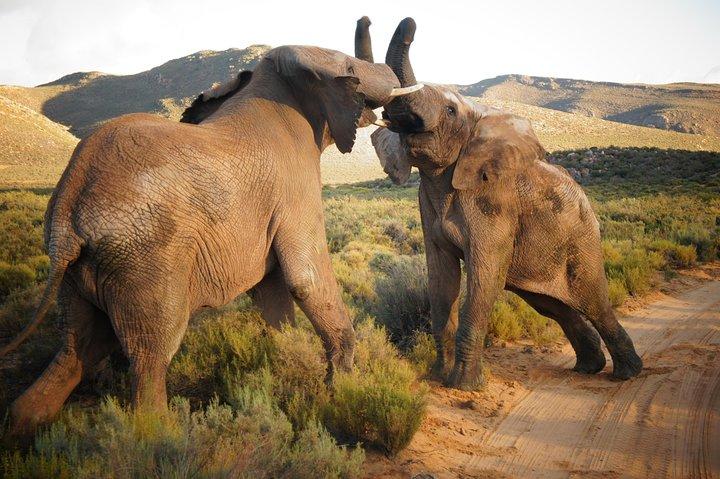
Visit national parks like Kruger for a chance to see the Big Five. Book guided tours for a safe and informative experience.
Respect local customs and traditions. Greeting with a handshake is common, and it's polite to address elders with respect.
Spring (September to November) offers mild weather and blooming landscapes, ideal for outdoor activities and wildlife viewing.
Summer (December to February) is hot and busy, perfect for beachgoers but expect crowds and higher prices.
Fall (March to May) provides pleasant weather and fewer tourists, making it a great time for sightseeing and exploring.
Winter (June to August) is cooler and less crowded, ideal for visiting the northern regions and enjoying indoor attractions.
ZAR R
$60-$120 p/day
English, Afrikaans, Zulu
March-May, September-November