Getting There
Access to Progress Station is typically via specialized transport arranged through scientific expeditions.
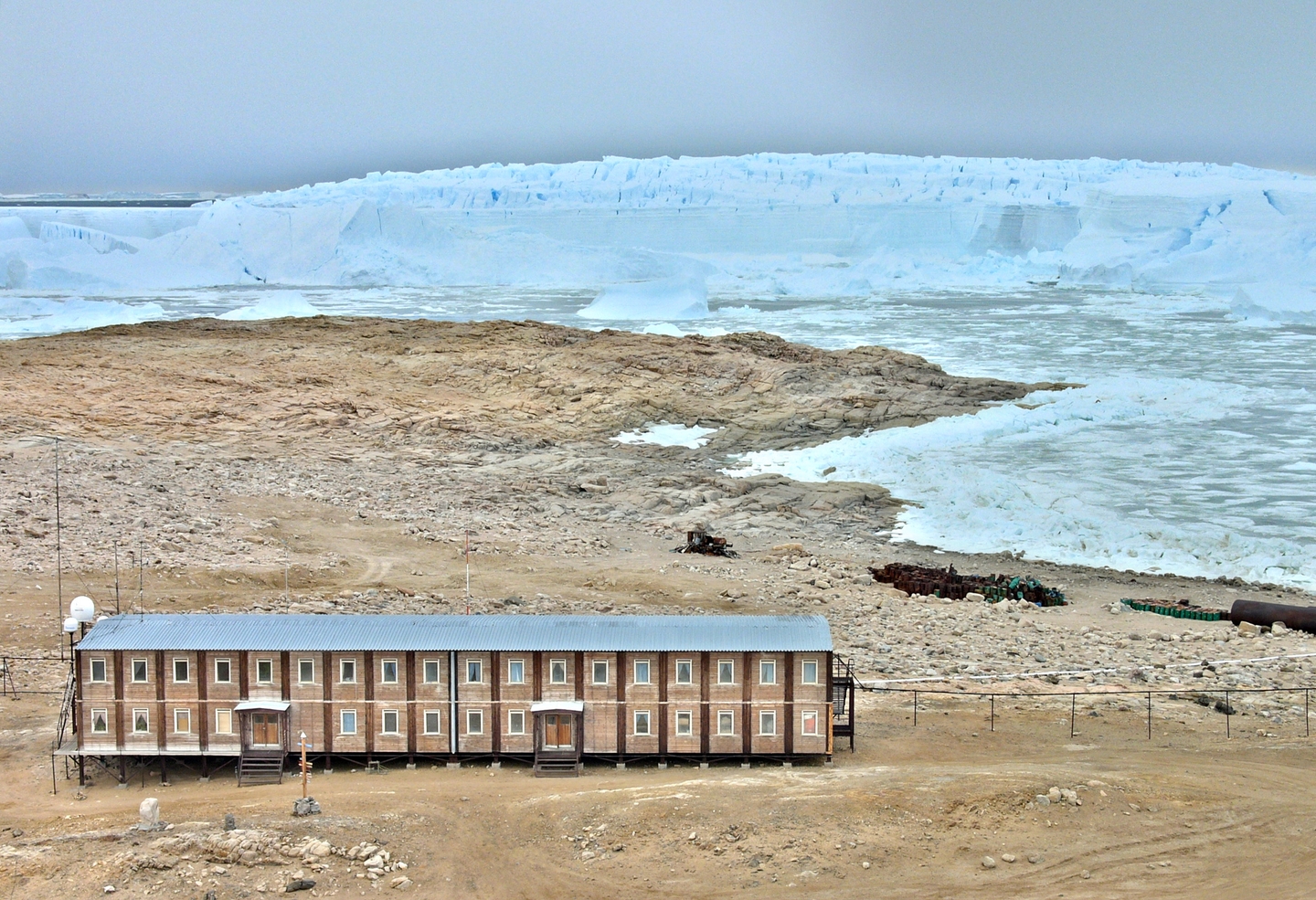
Progress Station is a pivotal Russian research station in Antarctica, strategically located in the Larsemann Hills oasis. Established in 1988, it has evolved into a crucial hub for scientific research and logistics, supporting the Vostok station. The station boasts a modern wintering complex equipped with residential units, a sauna, a gym, and medical facilities. An adjacent airfield, Zenit, complements the station's logistics, featuring a 3,000-meter runway capable of accommodating large aircraft. Despite its remote location, Progress Station is a beacon of scientific exploration and international collaboration in one of the world's most challenging environments.
Key support base for Vostok station.
Modernized wintering complex with facilities.
Adjacent airfield with a 3,000-meter runway.
Remote and isolated location with extreme weather conditions.
Primarily a scientific research facility with limited access.
Modern facilities for long-term stays, including medical care.
Access to Progress Station is typically via specialized transport arranged through scientific expeditions.
Russian, English
Scientific Research, Exploration
Prepare for extreme cold and rapidly changing weather conditions.
The station is equipped with a modern wintering complex, including a sauna and gym.
Communication facilities are available but may be limited due to remote location.
November-February
Spring is a transition period with increasing daylight but still cold temperatures.
Summer offers the most daylight and is the primary season for research activities.
Fall sees decreasing daylight and colder temperatures, marking the end of the research season.
Winter is extremely cold and dark, with limited activities due to harsh conditions.