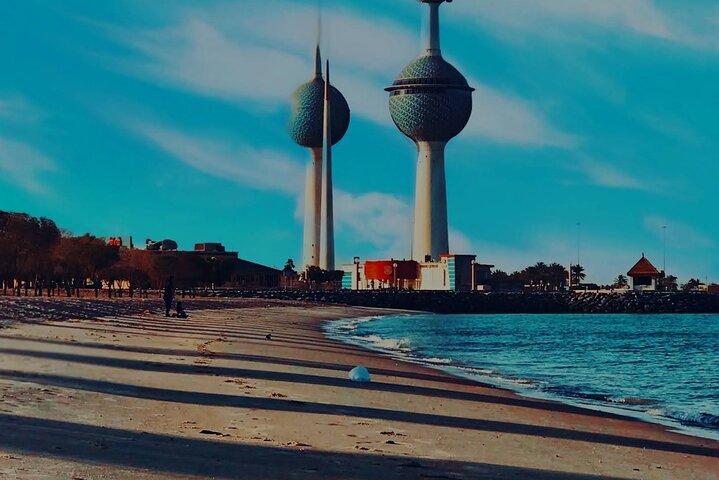
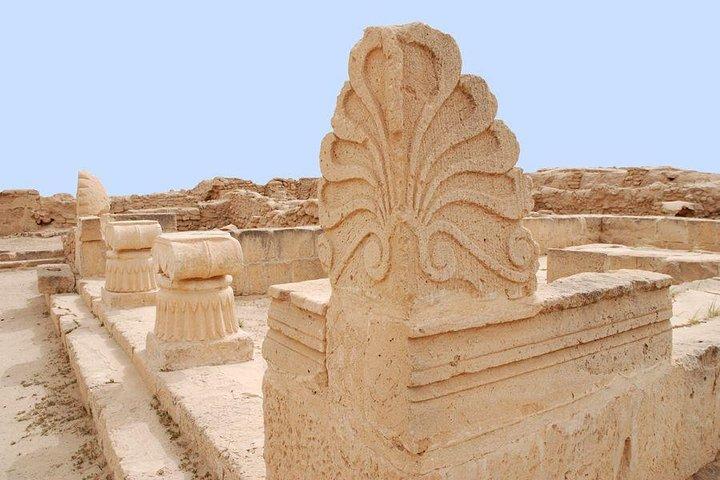
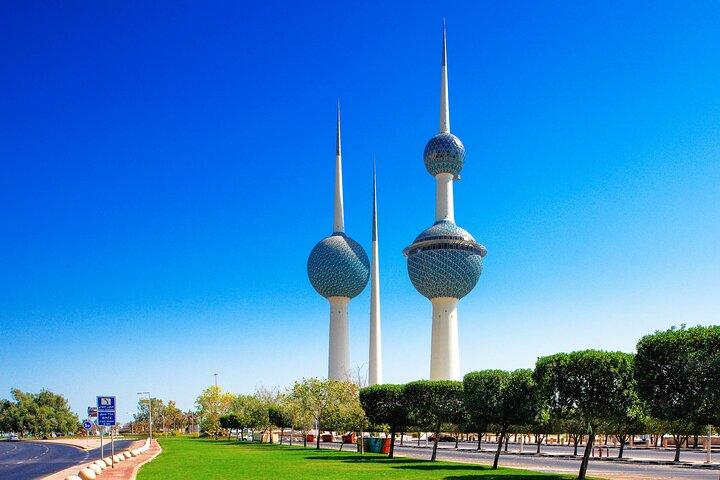
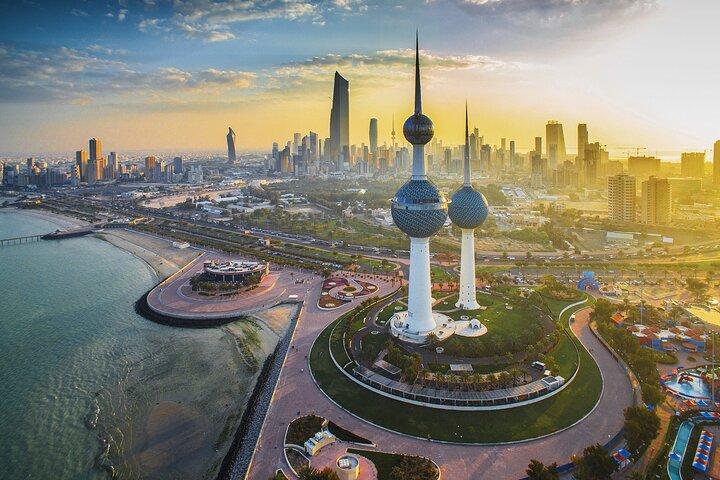
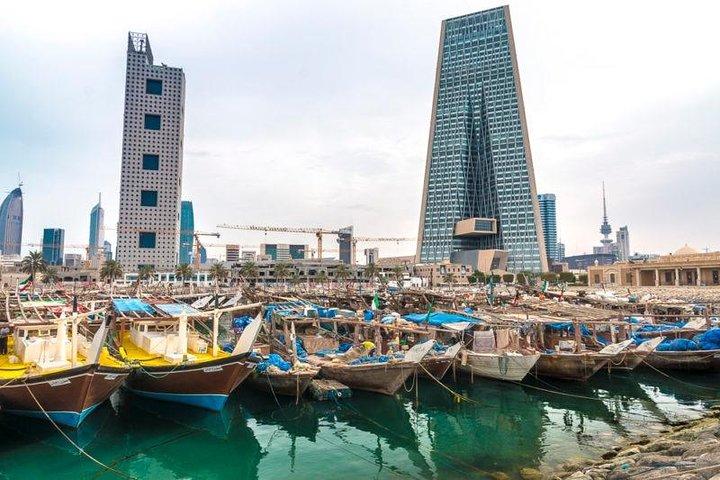
Kuwait, officially the State of Kuwait, is a country in West Asia. With a coastline of approximately 500 km (311 mi), it is situated at the head of the Persian Gulf in the northeastern edge of the Arabian Peninsula, bordering Iraq to the north and Saudi Arabia to the south. Kuwait is geographically the closest Gulf country to mainland Iran (separated only by a small Iraqi coastline). The country is a small city-state; most of the population reside in the urban agglomeration of Kuwait City, the capital and largest city. As of 2024, Kuwait has a population of 4.82 million, of which 1.53 million are Kuwaiti citizens while the remaining 3.29 million are foreign nationals from over 100 countries. In 2024, Kuwait had the world's seventh largest number of foreign nationals as a percentage of the population, where its citizens make up less than 30% of the overall population. The territory of modern-day Kuwait has been occupied by humans since antiquity, particularly due to its strategic location near the mouth of the Tigris and Euphrates rivers. In the early 18th century, the territory of modern-day Kuwait was under the jurisdiction of the Bani Khalid clan; then the territory became known as the Sheikdom of Kuwait and a British protectorate in 1899. Prior to the discovery of oil reserves in 1938, the territory of modern-day Kuwait contained a regional trade port. The protectorate agreements with the United Kingdom ended in June 1961 when Kuwait officially became an independent state. From 1946 to 1982, Kuwait underwent large-scale modernization, largely based on income from oil production. In the 1980s, Kuwait experienced a period of geopolitical instability and an economic crisis following the stock market crash. It suffered pro-Iranian attacks during the Iran–Iraq War, as a result of Kuwait's financial support to Iraq. In 1990, the state of Kuwait was invaded, had a puppet regime installed, and was subsequently annexed by Ba'athist Iraq under the leadership of Saddam Hussein following disputes over oil production. The Iraqi occupation of Kuwait ended on 26 February 1991, after a U.S.–led international coalition expelled Iraqi forces from the country during the Gulf War. Kuwait is a high-income economy, backed by the world's sixth largest oil reserves. Like most other Arab states of the Persian Gulf, it is an emirate; the emir is the head of state and the ruling Al Sabah family dominates the country's political system. Its official state religion is Islam, specifically the Maliki school of Sunni Islam. It is a founding member of the GCC and is also a member of the United Nations, OPEC, the Arab League, and the Organisation of Islamic Cooperation. As of February 2026, Kuwait has the world's most valuable currency, with one Kuwaiti Dinar being worth 3.25 USD.
Kuwait's economy is heavily reliant on oil, making it one of the wealthiest countries in the region.
The country has a rich cultural scene, often referred to as the 'Hollywood of the Gulf' due to its influence in arts and media.
Kuwait is a strategic location at the head of the Persian Gulf, with a significant historical and geopolitical role.
The population is diverse, with a large percentage of expatriates from various countries.
Kuwait is a dry country, meaning alcohol is not legally available.
Kuwait is known for its rich culinary heritage, with dishes like machboos and mutabbaq samak being local favorites.
KWD د.ك
$100-$200 p/day
Dress modestly, especially when visiting religious sites, and be aware of local customs and traditions.
Taxis are a common mode of transport, but it's advisable to agree on the fare before starting your journey.
Arabic, English
Kuwait offers a mix of traditional souks and modern malls. Bargaining is common in local markets.
Kuwait experiences extreme heat in the summer, so plan outdoor activities for early morning or late afternoon.
November-March
Spring is a pleasant time to visit Kuwait with mild temperatures, making it ideal for sightseeing and outdoor activities.
Summers are extremely hot, with temperatures often exceeding 45°C (113°F). It's best to stay indoors during peak heat hours.
Fall offers cooler temperatures and is a good time to explore the cultural and historical sites.
Winters are mild and comfortable, perfect for exploring the city and its surroundings.