Getting Around
Bukhara is best explored on foot to fully appreciate its historic sites.
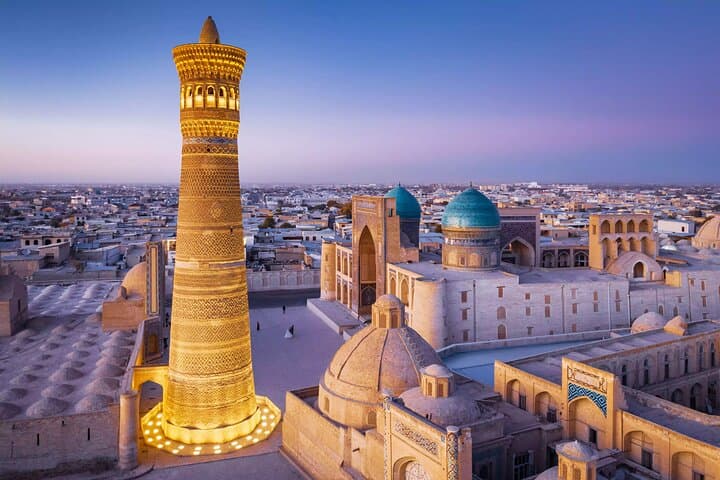
Bukhara, the seventh-largest city in Uzbekistan, is a treasure trove of history and culture, with a population of over 280,000. Situated on the historic Silk Road, it has been a pivotal center for trade, scholarship, and religion for millennia. The city boasts approximately 140 architectural monuments, including numerous mosques and madrasas, earning its historic center a UNESCO World Heritage Site designation. Known as 'Noble Bukhara', it was the birthplace of the esteemed scholar Imam Bukhari. Visitors can explore its rich past through its well-preserved structures and vibrant cultural scene.
Bukhara, the seventh-largest city in Uzbekistan, is a treasure trove of history and culture, with a population of over 280,000. Situated on the historic Silk Road, it has been a pivotal center for trade, scholarship, and religion for millennia. The city boasts approximately 140 architectural monuments, including numerous mosques and madrasas, earning its historic center a UNESCO World Heritage Site designation. Known as 'Noble Bukhara', it was the birthplace of the esteemed scholar Imam Bukhari. Visitors can explore its rich past through its well-preserved structures and vibrant cultural scene.
Historic center listed as a UNESCO World Heritage Site.
Over 140 architectural monuments.
Rich history as a Silk Road trade hub.
Birthplace of the scholar Imam Bukhari.
Known as 'Noble Bukhara'.
Rich cultural heritage with numerous historical sites.
Part of the ancient Silk Road, ideal for history enthusiasts.
Home to many UNESCO World Heritage Sites.
Bukhara is best explored on foot to fully appreciate its historic sites.
Try the local dishes such as plov and shashlik at traditional eateries.
History buffs and cultural explorers.
UZS
$50-$100 p/day
Uzbek, Russian, English
Dress modestly when visiting religious sites.
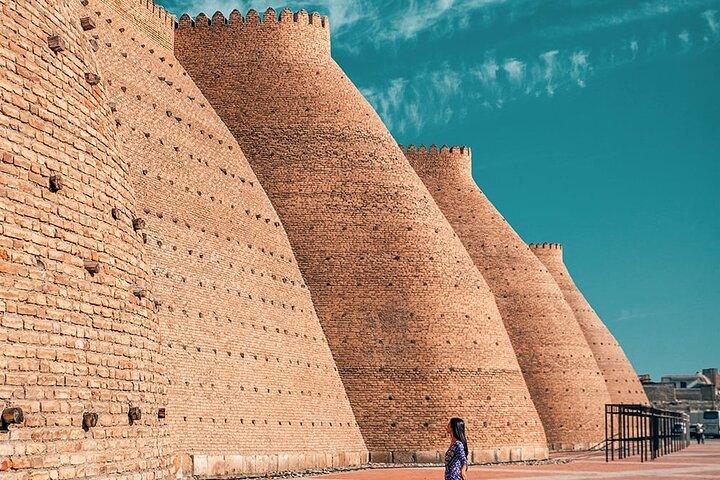
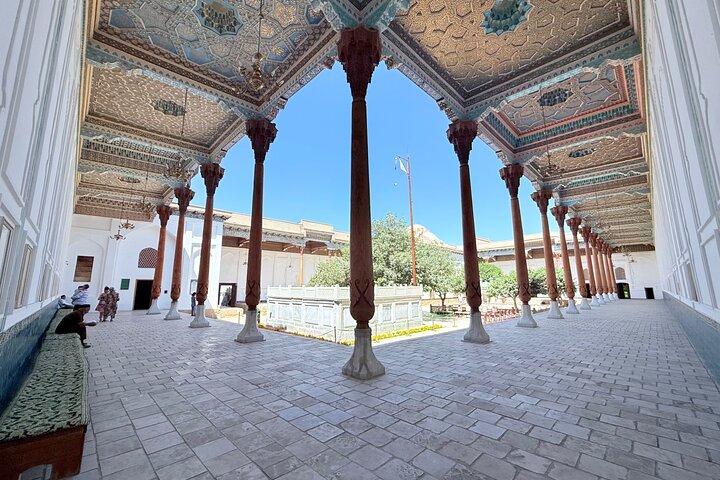
Don't miss the Ark Fortress and Bolo Haouz Mosque.
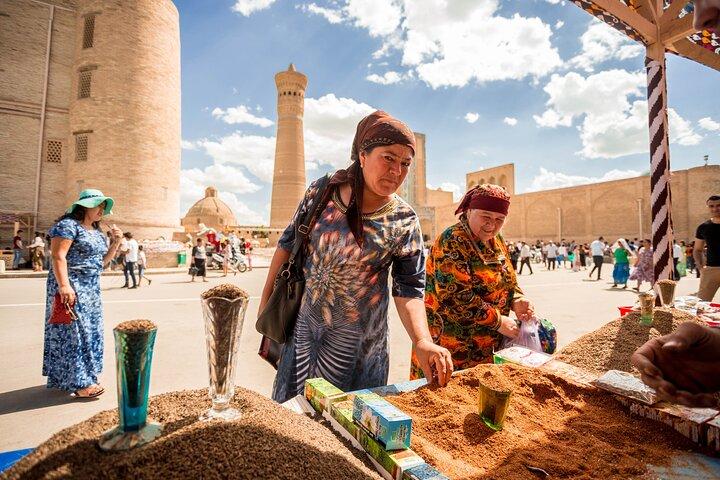
Explore local bazaars for unique souvenirs and handicrafts.
Cultural Exploration, Historical Tour, Sightseeing, Educational Visit
April-JuneSeptember-November
Spring is ideal for visiting Bukhara with mild temperatures and blooming gardens.
Summers can be hot, but it's a vibrant time with local festivals.
Fall offers pleasant weather and fewer tourists, perfect for exploring.
Winters are cold but offer a quieter experience and beautiful snowy landscapes.